Rian grew up watching PBS and recalls the Magic School Bus and Arthur. But they were particularly struck by Mister Rogers, who offered this comfort to kids who were scared about the state of the world they saw in the news. “Look for the helpers.” Disasters, including man-made ones, reveal the goodness of people and community. In every disaster, there are people who try to make things better. Rian isn’t a stranger to receiving help from their community, and Rian has learned that, just like people helped them, there’s a lot they can do to help other people.
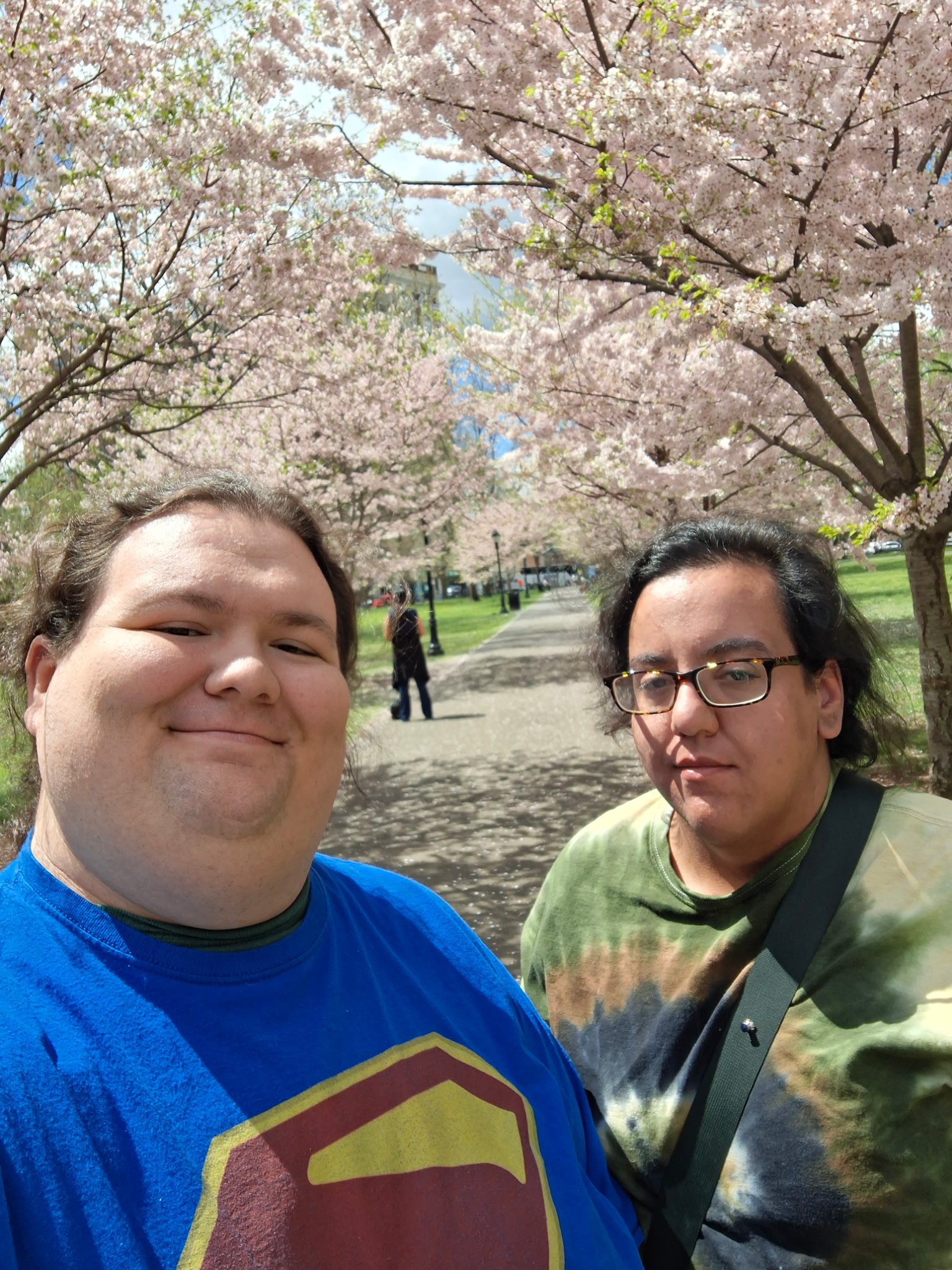
Rian grew up in the San Joaquin Valley southwest of Bakersfield in inland California. This is one of the poorest parts of California, with the highest rates of asthma and the highest rate of unemployment in the state. Most of the work was seasonal in agriculture or the oilfields. Rian’s mom worked in agriculture for a while, before becoming a taxi driver. Rian has an older sister, an older brother, and a younger sibling.
Bakersfield is the most conservative part of California. Prop 8 and other queer-phobic initiatives came out of Bakersfield while Rian was growing up. This was not a comfortable place for Rian. Rian felt an allyship towards other queer people, but they also wanted to explore their own personality and how they love. “I was always an outcast when I was a kid,” recalls Rian. “I was never really truly accepted because I held so much of myself back.” But Rian didn’t feel hopeless. Rian could see in the media that “there are people that are trying to fight for their rights”, and that was “a constant reminder that there were others out there.”
Rian grew up attending a variety of Christian churches but largely stopped attending when they were 10. What Rian was hearing in church didn’t line up with what Rian was learning elsewhere. Rian remembers thinking, “Bill Nye the Science Guy says I need to look at evidence,” but they weren’t seeing that kind of evidence at church. When Rian brought up their doubts with their mom, she suspected it was an excuse to sleep in on Sundays. She said, “Okay, if we’re going to church, you’re gonna get up and clean.”
So that’s what Rian did! Every Sunday, they got up and cleaned the house while their family was at church. Because they were hungry on Sunday mornings, they learned how to cook for themselves. Rian says that was the beginning of them being “not just being independent in thought but independent in action.”
When Rian was in middle school, Rian’s local newspaper included an image of them and their mother waiting in line at the food bank. Rian’s peers at school bullied them, “especially being a little rotund, a little bigger person. "Why are you waiting in line for more food?’” But the judgment decreased significantly when Rian started volunteering at the food bank. Rian helped reorganize the food bank in their community, replacing the wooden shelves and hand-picking with an assembly line system, almost doubling the number of people who could receive assistance in the time the food bank was open.
The kids who had bullied Rian saw that they were a person who wanted to be a helper just as much as they were a person who sometimes needed help. Rian was a member of Future Farmers of America, a “slightly conservative organization,” but an organization where people genuinely believed in members of a community helping one another. “There’s a lot of people,” notes Rian, “where as long as you’re wanting to lend a hand it doesn’t really matter where you’re from. As long as you’re willing to hold up a pipe while they tack it together. If you’re willing to hold the door while they come in, they’re willing to say hi.” The Future Farmers of America taught Rian that helping people involved not just direct assistance to people, but building better structures in their communities.
Rian says that their first experience of what it was like to be in a truly progressive area was in high school when they joined a robotics club and travelled to the San Francisco area for a competition. “I walked down the street. and I saw men holding hands. I played bocce ball in the park with a 70 year old man who was telling me about his partner who died during the AIDS epidemic.” Rian asked why life couldn’t be this way all the time. In their first year of college, they realized that they’re bisexual and non-binary.
Rian had excelled in science since being a young kid. Whenever the washing machine broke down, Rian was the person to fix it. Rian knew they’d pursue a career involving science. They thought they might become a mortician or a coroner – “It takes less school to work with a dead person than a living one.” However, in their senior year of high school, an acquaintance brought a gun to school and shot and injured a classmate. Seeing the impact of violence on the family and community up close convinced Rian they couldn’t work in the field. Rian decided to take their interest in life science into education. Ryan won a scholarship from a pair of teachers, Glenn and Jean Black, “that was a leg up for me to be able to afford the 1st year of college.”
Rian attended Taft College, then transferred to CSU Bakersfield. In college, Rian started working on a minor in religious studies. “Throughout my teenage years, I had become a little bit of a militant atheist, and I realized that was kind of off-putting.” Rian found that their attitude towards religion was “dismissive of other people’s lived experiences.” “I realized...I’m not that kind of person.” Rian, like many people, hadn’t changed their understanding of the universe, but they found the culture of their belief system to be a bad fit.
Rian’s area of religious study “wasn’t a particularly easy topic.” Rian studied cults and how the public authorized genocides. But while Rian was learning about such dark human behaviors and dealing with the illness of their father, Rian was struck by something surprising: in all of these terrible, dark periods, there were people doing what they could to help. Regardless of what was going on in the world, “there were always people who were saying, ‘something isn’t right here.’”
Rian was struck by this, because their own life had so clearly benefitted from the work of people committing to help where they can. “Because of the changes that we as a society decided to make,” observes Rian, “those who are disabled have social security. Mothers have WIC. Children have SNAP benefits.” “I know for a fact,” says Rian, “that if it wasn’t for the kindness and generosity of others, I would be dead.”
Before Rian could complete their Bachelor’s degree, Rian’s father was diagnosed with lower intestinal cancer. Rian had to balance commuting an hour each way to college, caretaking for their sick father, and their existing caretaking duties for their mother, who had become progressively more disabled through Rian’s childhood and early adulthood. Rian left college and took their Associates degree to work in the local school district, as a paraprofessional, as a substitute for school staff, and as a tutor.
As a college student dealing with their responsibilities to their ailing parents, to their siblings, to their work-study job, and to their classes, Rian felt like they were facing a lot of troubles alone. They looked online for friendship and romance, and found Will Mason from our congregation. “I told him that I wanted someone to talk to and someone to be with, and we kind of grew on each other.” “We were both very open with each other about how we’d never really been able to live as ourselves,” recalls Rian, but “we both wanted to live with kindness and authenticity.” Rian says they saw that Will “was a very kind soul, and I saw that we both lived and loved in a similar way.”
Will and Rian were long distance for almost a decade, from 2016 until late 2025. “It took me a while to save up the money to be able to come, and it took him a while to convince his parents that I wasn’t some kind of axe murderer.”
The first time Rian visited was during the intense snow in early 2018. Rian had grown up in the California desert, and the worst winter conditions they’d encountered had been a few nights where the temperature dropped below zero. The day after Rian arrived, Rian and Will decided to walk up East Main Street in deep snow to get to the Walgreens. “It took us an hour-and-a-half to walk half a mile,” remembers Rian. “I went to kiss him and our lips froze together.”
Rian started coming to UU Meriden because Will told them about it. Rian says that they were impressed by how members of our church seem to “walk the walk”, engaging in community building and working for social justice. Rian found the church to be very welcoming – not just a church for religious people who are queer-friendly but genuinely welcoming to people from a variety of backgrounds and beliefs. Other churches Rian has visited have centered around “this is what we believe in. If you believe it too, you’ll be welcome.” Rian said that at UU Meriden, they heard, “you are welcome here. Here is what we believe in.”
When Rian isn’t at work, they enjoy science fiction. Rian really enjoyed reading Project Hail Mary and felt a deep connection to the protagonist, Ryland Grace. Like Rian, Ryland is an educator who has to give up a lot, travels far to get where he’s needed, makes connections, and helps others. The sci-fi series Rian loves the most, though, is Stargate. “Aside from the fact that I started watching with my father, who introduced me to science fiction,” Rian also loves that the main character is an archeologist. Stargate is the story of a man who tries to understand other people’s beliefs so that he can help them – not just change them.
Rian is bringing their belief in the importance of service to us at UU Meriden, too. Rian is going to be giving the sermon on May 28. “I’m used to being in education,” says Rian, “I’m trying not to be so authoritative.” Rian is enjoying the challenge of learning a new way to be one of Mister Roger’s “helpers”, a person who, when the world can be a scary place, asks how they can make their part of it a little bit better.

-
Location